Vol. 18 No. 2 (2025): DOSSIÊ ESTUDOS SOBRE COMUNICAÇÃO POLÍTICA, DEMOCRACIA E SOCIEDADE DE CONSUMO
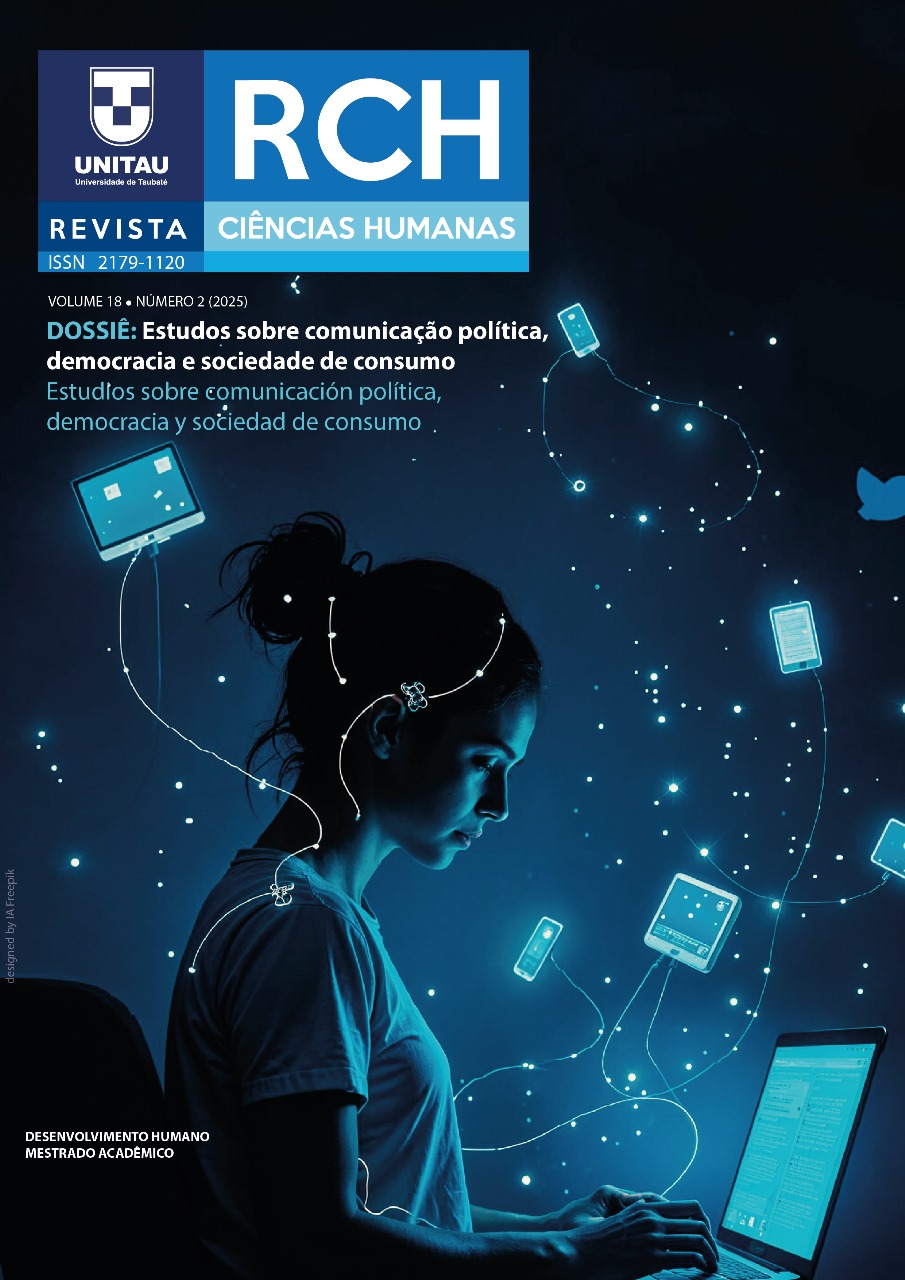
Studies on communication in Latin America show strong changes in the traditional paradigm, as society has transformed alongside the mass media. This transformation is particularly evident in democratic regimes characterized by electoral alternation, social innovation, and profound shifts in consumer society, which pave the way for a multidisciplinary and transdisciplinary approach to the human and social sciences.
Political campaigns have also evolved, making it necessary to reflect on the reach of hate speech and the role of emotions in electoral decision-making and democracy, especially in a society increasingly shaped by information and data circulating on social networks.
For many years, it was believed that the media exerted its influence mainly on authoritarian regimes. However, it is now observed that even in consolidated democracies, the media also serves as a platform for certain discourses. Moreover, new communicative phenomena—such as populism, fake news, and post-truth—have introduced integrative elements of consumer society and marketing.
Returning to a society based on coexistence, interaction, and collective participation requires understanding how governments, organizations, and institutions communicate to preserve the status quo. On the other hand, there is visible growth in alternative media—such as community radio and television—which seeks to break away from institutional hegemony and control.
Published:
2025-12-08
 Português (Brasil)
 English
 Español (España)